Running a successful enterprise requires managing countless moving parts, but few responsibilities carry as much weight as commercial property safety. A safe, well-maintained building protects employees, clients, contractors, and valuable physical assets from preventable harm. Beyond mitigating legal liabilities and avoiding costly structural repairs, establishing comprehensive safety protocols builds confidence among staff and patrons alike. Whether managing a busy retail space, a multi-tenant office complex, or an industrial facility, maintaining safety under one roof requires a proactive, multi-layered approach.
1. Prioritize Internal Life Safety and Environmental Systems
The interior of a commercial building is where daily business unfolds, making internal safety systems your first line of defense against emergencies.
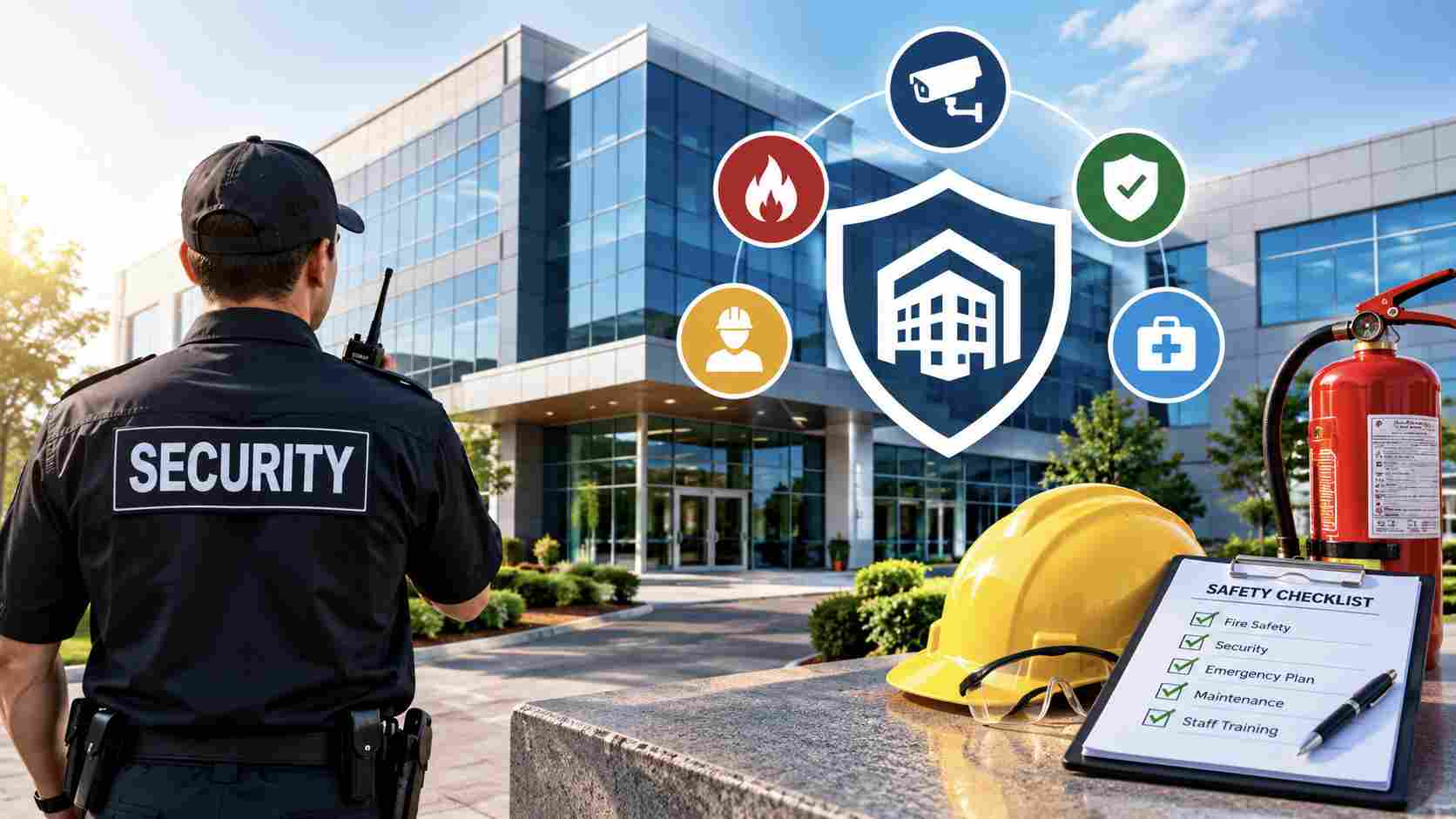
- Life Safety Equipment Maintenance: Fire alarms, smoke detectors, automated sprinkler systems, and emergency lighting must undergo regular testing according to local municipal building codes. Portable fire extinguishers should be strategically placed in accessible areas—such as kitchens, breakrooms, electrical closets, and main corridors—accompanied by routine monthly checks and annual professional inspections.
- Egress and Walkway Maintenance: Hallways, stairwells, and emergency exit routes must remain completely clear of clutter, stored inventory, and office furniture at all times. Bright, functional emergency lighting ensures orderly evacuations during power outages. Additionally, internal floor surfaces must be kept dry and slip-resistant, with wet-floor signage immediately deployed whenever cleaning occurs or wet weather is tracked inside.
2. Protect Structural Envelope and Roof Integrity
A commercial building’s structural envelope—consisting of the roof, exterior walls, foundations, and entryways—shields everything inside from environmental hazards and water damage.
- Roof Inspections and Drainage: Roof failure is one of the most frequent and expensive hazards in commercial real estate. Water infiltration can rot structural timber, damage electrical conduits, ruin inventory, and create ideal conditions for mold growth. Conducting biannual roof inspections allows facility managers to spot damaged membranes, cracked flashing, or clogged roof drains before standing water creates serious overhead weight issues or ceiling leaks.
- Structural Sealing and Pest Proofing: Inspecting exterior masonry, expansion joints, window seals, and door sweeps keeps moisture and pests outside. Sealing small gaps prevents subtle, ongoing water damage that could compromise building stability over time while simultaneously detering unwanted pests from invading employee work areas.
3. Safeguard Exterior Grounds and Landscaping
Exterior property maintenance is just as critical as internal safety precautions. Outdoor areas form the initial touchpoint for anyone visiting your location and present unique liability risks if neglected.
- Illumination and Walkways: Adequate exterior lighting across parking lots, walkways, loading docks, and building entrances minimizes trip hazards and deters unauthorized access after hours. Cracks, potholes, and uneven concrete in parking areas or walkways should be repaired quickly to eliminate fall risks.
- Landscape and Vegetation Management: Overgrown trees and shrubbery present severe safety and security hazards. Overhanging branches can scrape roof membranes, obstruct security cameras, block lighting, or fall onto vehicles and pedestrians during high winds or heavy winter snowfall. When managing mature trees near buildings, parking structures, or power lines, partnering with a certified tree service in Logan ensures dangerous limbs and deadwood are pruned safely before they create structural hazards or property damage.
4. Implement Routine Safety Audits and Emergency Preparedness
Physical upkeep must be supported by clear operational procedures and proactive management habits.
- Structured Safety Inspections: Facility managers should establish a recurring safety audit schedule. Inspecting HVAC filters, electrical panels, plumbing lines, and security hardware on a set calendar prevents small operational oversights from turning into major facility disruptions.
- Emergency Action Plans: Every commercial facility requires a clear, documented emergency response plan covering fires, severe weather, medical emergencies, and power outages. Conducting periodic drills ensures occupants understand evacuation routes, shelter locations, and emergency contacts, dramatically reducing panic during an actual event.
Conclusion
Creating safety under one roof is an ongoing operational commitment rather than a one-time project. By combining internal life safety protocols, structural envelope care, proactive exterior landscaping management, and regular safety audits, commercial property owners and facility managers build a secure, resilient environment. Investing in proactive maintenance not only protects structural assets and limits liability, but also ensures that tenants, staff, and visitors can work and interact in a safe space every day.