Relocating an active manufacturing plant or industrial facility involves moving heavy, high-value machinery safely and efficiently. Minimizing production downtime requires careful planning, strict safety protocols, and the right industrial tools. Hydraulic equipment plays a central role in plant moves, providing the controlled force needed to lift, shift, and position heavy machinery within tight spaces. Knowing which hydraulic systems to deploy for specific moving tasks keeps project timelines on schedule and protects valuable machinery from damage.
Essential Hydraulic Machinery for Plant Relocations
Selecting the proper hydraulic lifting and moving gear depends on equipment geometry, weight, ceiling heights, and access paths within the origin and destination facilities.
Hydraulic Gantry Systems
Hydraulic gantries are indispensable for heavy lifting inside buildings where traditional cranes cannot operate due to limited ceiling heights. These systems consist of telescopic vertical legs mounted on track bases, topped with structural steel beam headers.
Hydraulic cylinders inside the legs extend to lift heavy machinery off foundation bolts, hold loads steady in mid-air, and lower equipment onto transport trailers or skid tracks. Multi-stage gantries offer exceptional load capacity while maintaining a compact footprint during transport and initial setup.
Low-Profile Hydraulic Jacks and Toe Jacks
Lifting heavy machinery often starts with extremely tight ground clearance. Standard hydraulic bottle jacks are usually too tall to fit under machine bases, requiring specialized low-profile equipment.
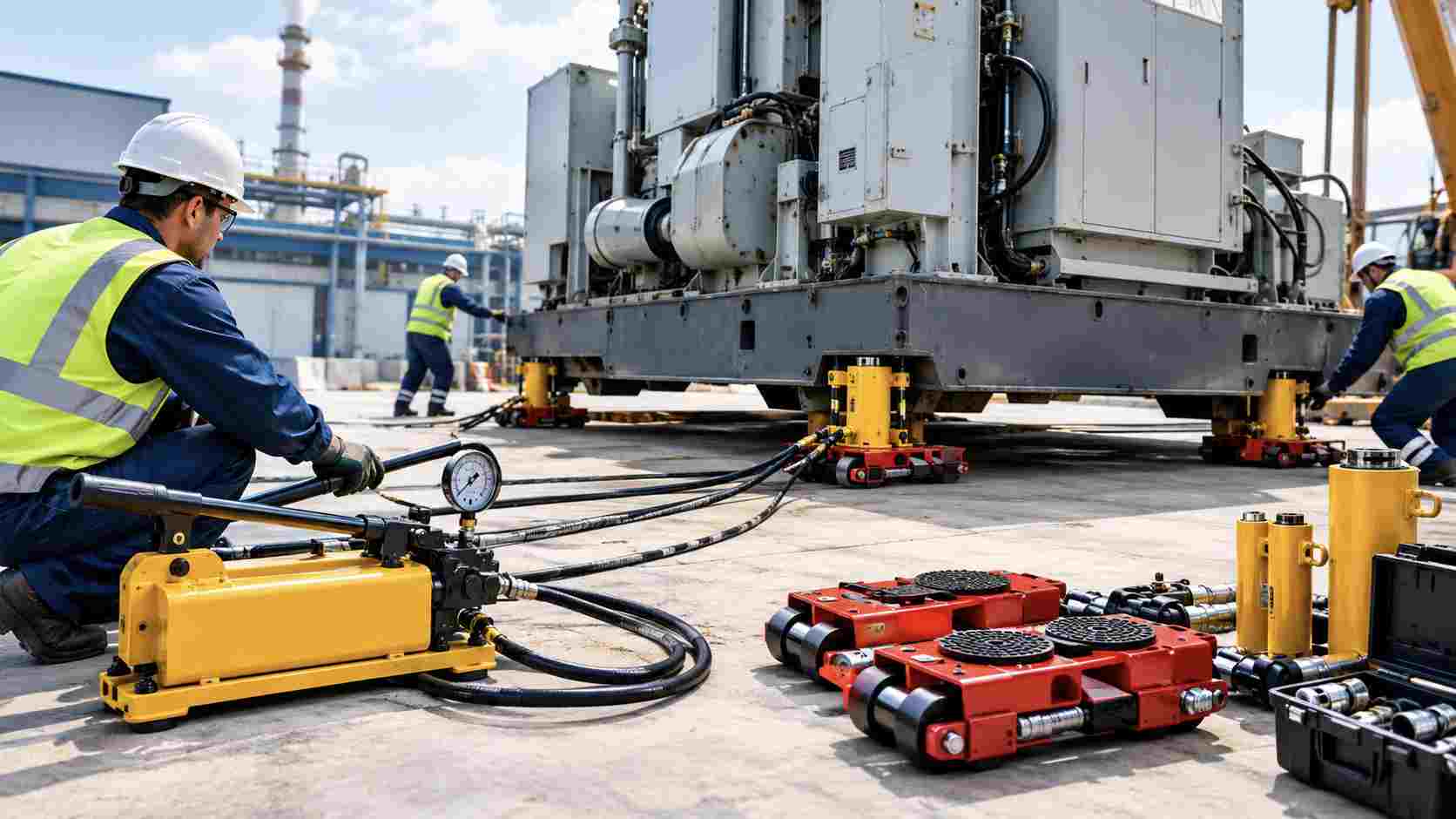
Hydraulic toe jacks feature low-clearance lifting feet that fit into gaps as small as one inch beneath machine bases. These compact jacks provide powerful lifting force, raising equipment just enough to insert heavy machinery skates, load-distribution plates, or hydraulic skidding shoes.
Self-Propelled Modular Transporters and Hydraulic Skates
Moving machinery across plant floors requires reliable rolling equipment. Heavy-duty hydraulic skates feature built-in hydraulic cylinders that balance load distribution across multiple rollers, preventing floor damage and ensuring smooth rolling over uneven concrete.
For extremely large machinery, self-propelled modular transporters use hydraulic drive motors and steering systems to navigate tight aisles and maneuver complex facility layouts with high precision.
Engineering and Planning for Facility Moves
Successful machinery moves rely on sound engineering principles, precise site surveys, and structured execution timelines.
Weight Distribution and Rigging Calculations
Before selecting lifting equipment, engineers must calculate total machine weight, evaluate center-of-gravity locations, and identify safe lifting points. Lifting a load off-center can overload single hydraulic legs, tilt the machine, or cause sudden load shifts.
Partnering with experts who provide comprehensive millwright and rigging services in Salt Lake City ensures that machinery disassembly, structural support, load calculations, and re-anchoring are executed safely and in accordance with safety standards.
Hydraulic Fluid and Environmental Containment
Operating high-pressure hydraulic equipment inside indoor manufacturing facilities requires strict fluid containment controls. A high-pressure line burst or fitting leak can create slip hazards and contaminate production floors.
- Pre-operation checks must confirm hose integrity, fitting tightness, and valve performance before applying hydraulic pressure.
- Containment trays and absorbent mats should be placed beneath hydraulic power units, hose connections, and active pump stations.
- Eco-friendly bio-based hydraulic fluids are often used in sensitive manufacturing settings to reduce environmental risks in the event of an accidental spill.
Final Alignment, Leveling, and Anchor Placement
Moving machinery to its new location is only part of the process; precise installation, leveling, and anchoring are essential to restore proper operational performance.
Precision Leveling with Hydraulic Assistance
Heavy production machinery, such as CNC turning centers, metal stamping presses, and plastic injection molding equipment, requires precise leveling to operate accurately and avoid structural frame strain.
Hydraulic jacks allow technicians to make micro-adjustments to machine elevation. Precision optical levels and electronic sensors guide technicians as they adjust shims and leveling feet, ensuring the machine frame is completely level before final anchoring.
Securing Equipment and Hydraulic Testing
Once level, machinery is secured to floor foundations using heavy-duty mechanical or epoxy anchor bolts. Technicians torque anchor bolts to exact manufacturer specifications to withstand operational vibration and dynamic loads.
After mechanical mounting is complete, auxiliary hydraulic circuits, cooling systems, and main power feeds are reconnected. Systematic pressure tests, fluid flushes, and functional dry-runs confirm system readiness before returning equipment to full production service.