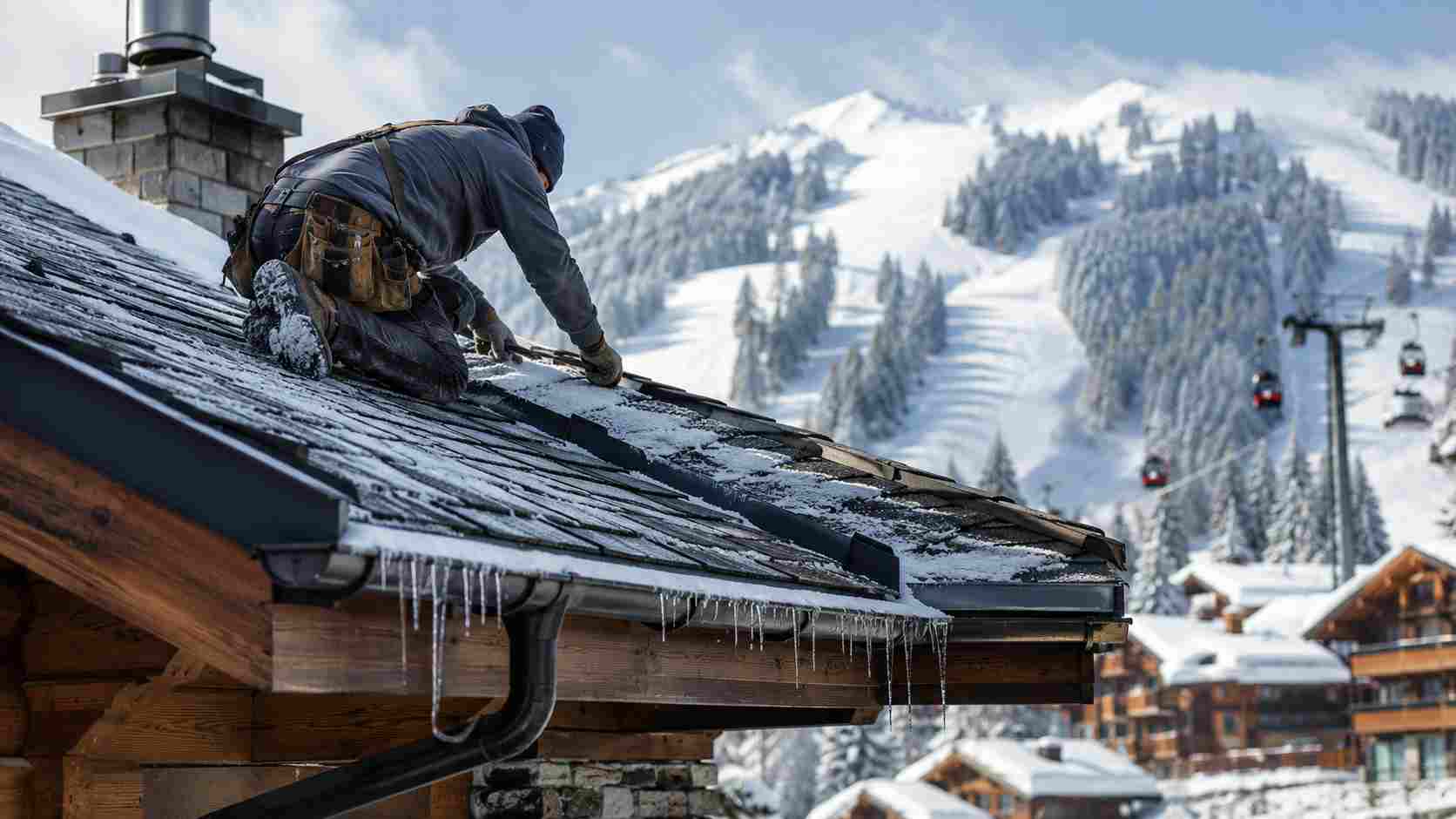
Peak ski season brings heavy snowfall and sub-zero mountain temperatures. For homeowners and rental hosts, it also brings the risk of severe roof leaks.
When furnaces run continuously, escaping interior heat melts heavy roof snowpacks. As meltwater trickles down to freezing eaves, it forms ice dams that back up under shingles and seep into ceilings. Preventing winter roof leaks requires proactive snow management, insulation, and continuous drainage control.
1. The Physics of Peak-Season Roof Leaks
Quick Takeaway: Winter roof leaks are caused by heat escaping from living spaces into the attic, melting snow from underneath, which then refreezes at cold eaves to form ice dams.
Many assume heavy snowfall alone causes leaks, but the primary culprit is internal heat loss. During peak ski season, indoor thermostats are set high, creating a temperature contrast between living areas and cold mountain air.
Warm air rises into unsealed attics, warming the roof deck. Snow touching shingles melts and trickles toward gutters. Because eaves extend past heated walls, they remain below freezing. Meltwater refreezes at the eaves, building an ice ridge that traps subsequent runoff. Trapped water then forces its way underneath shingles into drywall.
2. Seal Attic Thermal Bypasses and Improve Insulation
Quick Takeaway: Sealing air leaks around light fixtures, hatches, and exhaust vents keeps the roof deck cold, preventing snowpack from melting prematurely.
The most effective way to stop ice dams at their source is keeping your roof deck cold. Preventing heat transfer requires a two-step approach: sealing air leaks and maintaining attic insulation.
Prioritize these thermal sealing steps before deep winter sets in:
- Seal Recessed Lights and Stacks: Use spray foam around penetrations where warm air leaks into the attic.
- Insulate the Access Hatch: Weatherstrip the hatch door and place rigid foam board insulation over top.
- Verify Ventilation: Ensure soffit vents remain unobstructed by insulation so cold outdoor air circulates freely beneath the roof deck.
Thorough attic thermal sealing keeps heat inside your living space, lowering heating bills while keeping the roof deck cold.
3. Install Self-Regulating De-Icing Cables along Eaves and Gutters
Quick Takeaway: Self-regulating heat cables create open melt channels through ice dams, ensuring water drains safely off the roof before backing up into house walls.
Even with insulation, mountain sun and fluctuating temperatures melt surface snow, creating ice ridges along cold gutters. Installing self-regulating heat cables along roof edges, valleys, and downspouts provides a reliable line of defense.
Modern heating cables adjust output based on ambient temperatures, consuming power only when freezing conditions occur. For properties facing heavy snowfall, installing a professionally engineered snow melt system in Utah ensures gutters, downspouts, and eave overhangs remain clear of solid ice, keeping drainage pathways open during severe winter storms.
4. Safely Manage Snow Accumulation and Avalanche Hazards
Quick Takeaway: Use a telescoping roof rake from the ground to clear the bottom 3 to 4 feet of snow off eaves after major winter storms.
Allowing heavy snow to pile up along the lower roof edge increases structural weight and accelerates ice dams. Clearing the lower roof boundary removes the fuel source for ice dams before they start.
When clearing snow, follow these safety protocols:
- Rake from the Ground: Always use an aluminum roof rake while standing on solid ground. Never climb onto an icy roof.
- Leave a Thin Snow Layer: Avoid scraping the rake directly against shingles. Leave 2 inches of snow to protect shingle granules.
- Install Snow Guards: Place mechanical snow guards above entryways to prevent snow sheets from sliding onto guests or vehicles.
Integrating these habits into your ski resort roof maintenance protects both your building structure and visitor safety.
5. Maintain Open Drainage Channels in Gutters and Downspouts
Quick Takeaway: Clogged gutters trap standing water, which freezes into solid ice blocks that rip fascia boards off homes and block winter meltwater.
Clearing leaves, pine needles, and mud from gutters during autumn is critical. If gutters are filled with debris when snow falls, water cannot reach downspouts.
When standing water freezes inside a clogged gutter, it expands with immense force, twisting metal channels and pulling fascia boards away from the house. Solid ice blocks also prevent heat cables from melting drainage paths. Clean gutter channels allow meltwater to exit the roof line quickly.
6. Winter Roof Myths vs. Mountain Realities
| Common Winter Myth | Mountain Building Reality |
| “Heavy snow alone causes leaks.” | Leaks stem from interior heat escaping into the attic, melting snow from below. |
| “Salting gutters stops ice dams.” | Salt damages shingles, corrodes metal gutters, and kills plants below when water drains. |
| “A warm roof means good insulation.” | A warm roof indicates heat loss, which triggers rapid ice dam formation. |
7. Mid-Season Emergency Action Plan for Active Leaks
If you discover an active water stain or ceiling drip during a storm, act quickly to minimize structural damage:
- Relieve Water Pressure: Puncture a small hole in the center of sagging ceiling drywall with a screwdriver to drain trapped water into a bucket, preventing ceiling collapse.
- Collect Dripping Water: Place plastic sheeting and buckets beneath the drip zone.
- Avoid Hacking at Ice: Never chop at roof ice with axes or hammers, which punctures shingles and creates new leaks.
- Apply Temporary Socks: Lay nylon stockings filled with calcium chloride melt flakes vertically across ice dams to melt temporary drainage channels.
Executing ice dam prevention strategies before storms arrive remains far cheaper and safer than dealing with emergency interior repairs mid-season.
Preventing winter roof leaks during peak ski season requires proactive temperature control and drainage management. By sealing attic air leaks, clearing gutters, raking lower eaves, and installing self-regulating heat cables, you protect your roof deck from destructive ice dams. Safeguarding your roof ensures a warm, leak-free winter for your family and guests.