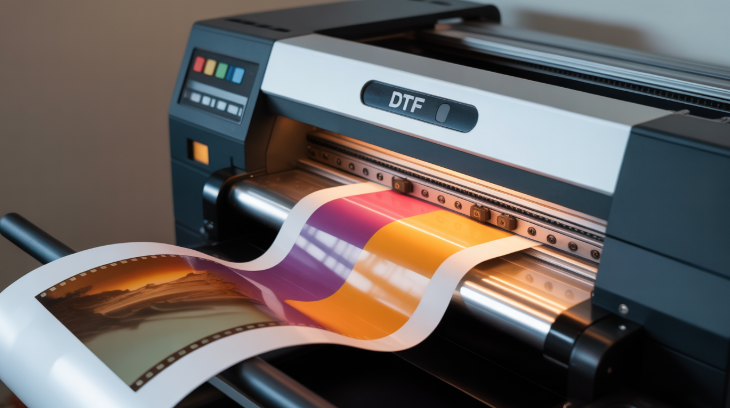
A DTF printer is a type of printer in which your design is printed on a special film, not onto fabric. The printed film is then dusted with powder, heat-pressed, and applied to a t-shirt or other item. It’s a straightforward, easy method to make colorful, long-lasting prints that don’t involve pretreating or complex procedures.
If you have ever been frustrated by cracking designs, hard fabrics, or printing processes that seem too costly and too perplexing, DTF may be the answer to your prayers. You can do anything, whereas you can’t with most other types of printing; everything from white to transparent bamboo. It’s becoming increasingly popular with small businesses and DIY soldering creators.
DTF printers are an easy way to make colorful, long-lasting designs on clothes. They work well for both businesses and people who like making custom shirts at home. Read more to learn which is right for you: DTF printing or Heat Transfer Vinyl.
What is DTF?
DTF means direct-to-film, a technology in which designs are printed on a special film, then powdered, cured, and transferred to fabric. Instead of printing on fabric directly, you print on a clear PET sheet and then transfer the design to a garment. This method eliminates pretreatments but still produces great color vibrancy, even on dark fabrics.
The DTF magic is that it combines the ease of digital printing with the longevity of conventional heat transfers. Small businesses rave about it because it works on cotton, polyester, blends, and even difficult fabrics like nylon. Whether you are producing one shirt or fifty, the system remains versatile.
How DTF Works
The DTF process begins with printing your artwork onto a PET film with special DTF print ink. Then, dust the print with DTF powder, shake off the excess, and melt the adhesive layer with a heat press or curing oven. The liquid powder turns into a sticky glue that attaches the design to the fabric.
When the transfer is finished, you just put it on a t-shirt and iron it. It peels off cleanly and results in a soft, long-lasting graphic. The best part is that you can store transfers for later, making bulk production or print-on-demand setups super easy.
DTF vs Others
When compared to screen printing, DTF offers faster setup and way less cleanup. Screen printing still wins for massive batches, but DTF gives you incredible detail without the mess. It also handles full-color artwork effortlessly, something vinyl and screen methods struggle with.
Compared to DTG printing, DTF has fewer limitations. You don’t need pretreat, you don’t fight with fibers on hoodies, and you can press onto more fabric types. DTG still feels softer on certain garments, but DTF transfers hold up better against everyday wear and washing.
DTF Printing Materials
The base materials consist of PET film, DTF ink, and hot-melt adhesive powder. These three components combine to deliver a stretchable, durable transfer with excellent color opacity. Quality is important, especially with film thickness and ink consistency, as poor materials can result in banding or peeling.
You’ll also need a heat press machine to finish the process. Many small shops also use a curing oven or automated powder shaker to speed up production. Even with extra tools, the overall setup stays affordable compared to other printing equipment.
DTF Printer Benefits
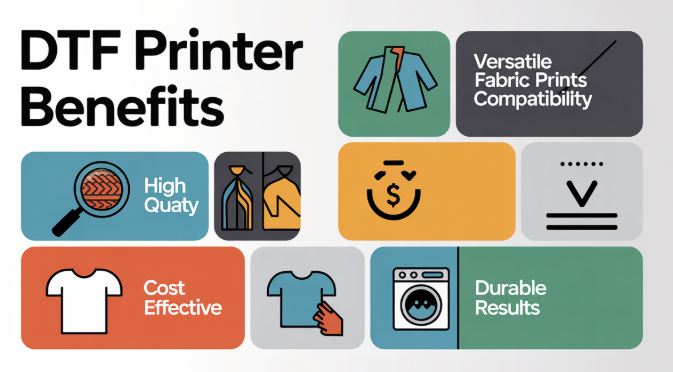
A DTF Printer Benefits section wouldn’t be complete without mentioning versatility. You can press on to cotton, polyester, fleece, bags, hats, and more without any changes. This is a wonderful feature for print-on-demand shops or those who wish to have a mixed product line.
Durability is also a big plus. Due to the unique composition of DTF ink and adhesive powder, these transfers don’t crack or fade. You can save prints for later, print on demand for small runs, and not waste materials. For many people, this is the moment they say, “Okay, this is worth switching to.”
DTF Printer Issues
All printing methods have their drawbacks, and DTF printing is no exception. You might be dealing with clogged nozzles, powder mess, or inconsistent curing if your system isn’t dialed in. Humidity and temperature play roles in print quality as well, so monitoring your environment can help minimize your chances of seeing color shifts or peeling.
Another matter is the quality of supply. Cheap films or low-quality powders result in poor adhesion or the formation of a gritty texture. Once you find reliable supplies and establish a workflow that makes your results higher than your problems, the problems disappear. It just takes a little practice and the right equipment to keep everything running smoothly.
Conclusion
DTF printing opened up new possibilities for designers, small businesses, and anyone interested in getting high-quality custom apparel without the headaches. Vibrant colours, soft prints, and the ability to print on virtually any fabric make it a preferred choice. Once you learn a few simple tricks, it becomes an easy and reliable process, whether you’re printing as a hobby or for business. DTF LINKO, a leading brand in DTF and UV DTF printers in China, also offers trusted equipment and supplies such as high-quality DTF dies and films to support consistent, professional results.
If you want a process that is inexpensive, has good durability, and is easy to do, look into DTF printing. Using the appropriate supplies and a bit of training, you can make crisp, enduring designs that look great every time. It’s a versatile solution that evolves with your vision, your skillset, and your company.
FAQs:
What is a DTF printer used for?
A DTF printer allows you to print designs on a special film that can then be applied to shirts, hoodies, bags, hats, and lots of other textile materials. It is suitable for small and large orders.
Do I need pretreat for DTF printing?
No, you don’t have to pretreat. That’s the biggest plus in DTF. The powder adhesive is used instead of a pretreat and allows the design to stick to the fabric.
What materials work with DTF transfers?
DTF prints can be applied to cotton, polyester, blends, fleece, denim, and also on certain types of nylon. It’s among the most versatile printing techniques around.
How long do DTF prints last?
With quality products and a good heat press, DTF prints can have a long life. They resist cracking and fading, and they typically withstand regular laundering.
Is DTF printing beginner-friendly?
Yes, it is friendly for beginners when the basic steps are known. It’s a simple process and most people feel confident after a couple of practice runs.