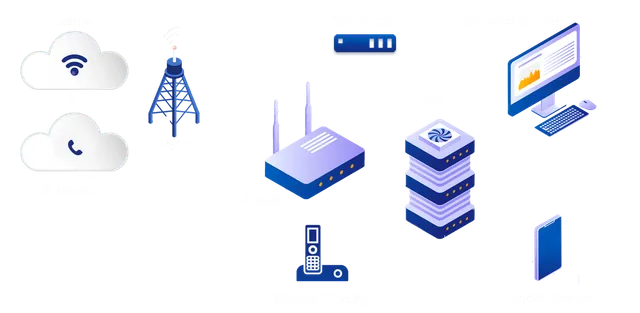
Business telephony today runs on IP networks. Office phone systems no longer depend on fixed copper lines to connect with external telecom networks. Instead, voice traffic moves through internet-based infrastructure. In this environment, SIP Trunk technology connects a company’s PBX with the wider telecom network and allows calls to move between internal systems and external numbers.
For organisations handling customer support, sales calls, or international communication, this connection layer determines how stable and scalable voice communication will be.
What Is SIP Trunking
A SIP Trunk is an IP connection that links a company’s PBX or VoIP platform with the public telephone network. Instead of installing separate physical lines, businesses use SIP sessions to carry voice traffic over the internet.
Each SIP Trunk supports a certain number of simultaneous calls. This capacity can be adjusted according to traffic levels. The PBX manages extensions and internal routing, while the SIP Trunk carries calls in and out of the organisation.
SIP Protocol Fundamentals
SIP stands for Session Initiation Protocol. It is the signalling standard used to establish and manage voice sessions between communication systems.
During a call, the SIP protocol:
- initiates the connection between systems
- identifies the destination number
- manages the session during the conversation
- terminates the connection once the call ends
Voice itself is transmitted as digital packets over the IP network.
How SIP Trunk Connects Systems
SIP Trunking links the internal call environment with external telecom networks. The PBX manages how calls are handled inside the company. The SIP Trunk carries the call to its destination.
When a call is made or received, the PBX sends a request through the SIP trunk. The telecom network then routes the call to the recipient.
Call Routing Architecture
Routing in SIP environments follows a clear structure:
- inbound calls arrive through the SIP trunk
- the PBX evaluates routing rules
- the call is directed to an extension, queue, or IVR
- outbound calls leave the system through the same SIP Trunk connection
Because routing is software-based, changes can be made without installing additional lines or hardware.
Benefits Over Traditional Lines
Traditional telephony relies on physical circuits. Each additional line requires installation and maintenance. SIP Trunking removes this limitation by allowing multiple calls to travel through the same IP connection.
Businesses often move to SIP infrastructure when they need to support distributed teams, expand into new markets, or increase call capacity without expanding physical telecom infrastructure.
Flexibility and Savings
SIP Trunking allows businesses to manage voice capacity more efficiently. Call channels can scale according to demand, which is especially important during marketing campaigns, seasonal peaks, or periods of rapid growth.
Operational advantages include:
- adjustable call capacity without installing additional physical lines
- centralised voice connectivity across offices and regions
- compatibility with VoIP and cloud PBX systems
- more efficient routing for international calls
DID Global delivers SIP Trunk connectivity that links PBX environments directly to global telecom networks. Businesses can connect their existing phone systems to international voice infrastructure, manage call routing across markets, and expand communication capacity without rebuilding their internal telephony setup.
Deployment Best Practices
Stable SIP trunk operation depends on network configuration and infrastructure quality. Businesses typically ensure that their network environment supports voice traffic alongside other data services.
Common deployment practices include:
- sufficient bandwidth for expected call volume
- prioritisation of voice traffic within the network
- monitoring of latency and packet loss
- redundancy options for network connectivity
These measures help maintain call quality and prevent service interruptions.
SIP Trunk technology has become a core element of modern business communication infrastructure. By connecting PBX systems with IP networks, it supports scalable voice connectivity and allows organisations to manage communication across offices, teams, and countries.