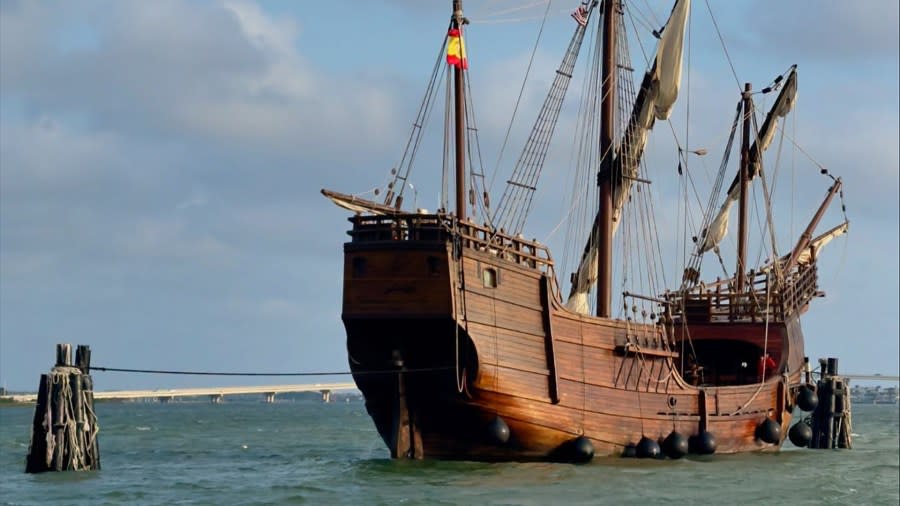
What Happened During the Collision?
A Glimpse of the Incident
At approximately 8 a.m., the Nao Trinidad was waiting for the Bridge of Lions to open for passage. However, due to an unforeseen engine failure, the vessel lost propulsion. Strong northward winds and the powerful currents of the bayfront further exacerbated the situation, causing the ship to drift uncontrollably into the bridge structure.
Minimal Damage Recorded
Despite the dramatic nature of the event, both the Nao Trinidad and the Bridge of Lions sustained only minor damage. The ship displayed some impact marks but remained operational. Meanwhile, the bridge—an essential structure for St. Augustine’s traffic—suffered superficial markings that did not compromise its integrity.
Emergency Response
Local emergency services promptly responded, towing the Nao Trinidad to a nearby barge for inspection and stabilization. Engineers conducted thorough evaluations to ensure the safety of the bridge for pedestrians and vehicles, while maritime experts assessed the ship’s condition.
What Caused the Collision?
Engine Failure: The Primary Culprit
The collision was primarily attributed to an engine failure, leaving the Nao Trinidad powerless as it awaited the bridge’s opening.
Environmental Factors
The vessel’s predicament was worsened by:
- Strong Winds: Northward gusts pushed the ship off course.
- Powerful Currents: The bayfront’s natural flow made it challenging to regain control.
Together, these factors created a scenario that was difficult for the crew to navigate without propulsion.
Community Reaction to the Incident
Local Interest and Social Media Buzz
The Nao Trinidad Bridge of Lions collision became a major talking point in St. Augustine. Residents and tourists shared photos and videos of the incident on social media, sparking widespread interest. Many locals expressed relief that the damage was minimal and admired the swift response by emergency services.
Preserving Maritime Heritage
For many, the collision underscored the importance of preserving maritime heritage. The Nao Trinidad remains a symbol of historical exploration, and its presence in St. Augustine has been a cherished aspect of the community’s cultural identity.
The Future of the Nao Trinidad
Repairs and Maintenance
Following the collision, the Nao Trinidad underwent repairs to address the impact marks and engine issues. Experts ensured that the ship could safely resume its role as a floating museum.
Continuing Its Mission
Despite the incident, the Nao Trinidad will continue to offer educational tours, allowing visitors to experience life aboard a 16th-century vessel. Its historical significance and immersive exhibits remain a valuable resource for learning about maritime exploration.
Lessons Learned from the Collision
Importance of Regular Maintenance
The incident highlights the critical need for thorough maintenance of historical ships like the Nao Trinidad. Routine checks and upgrades can prevent similar situations in the future.
Navigating Challenging Conditions
The event also emphasizes the importance of understanding and preparing for environmental factors such as winds and currents when navigating historical ships in modern waterways.
FAQs
What is the Nao Trinidad?
The Nao Trinidad is a replica of the historic ship that accompanied Ferdinand Magellan on his voyage around the world. It operates as a floating museum, educating visitors about 16th-century maritime history.
What happened during the Nao Trinidad Bridge of Lions collision?
On October 28, 2024, the Nao Trinidad collided with the Bridge of Lions in St. Augustine, Florida, after losing propulsion due to an engine failure. Strong winds and bayfront currents worsened the situation, causing the ship to drift into the bridge.
Was there significant damage to the Nao Trinidad or the Bridge of Lions?
No, both the ship and the bridge sustained only minor damage. The Nao Trinidad showed some impact marks but remained operational, while the bridge’s structural integrity was not affected.
How did emergency services respond?
Emergency crews arrived quickly, towing the Nao Trinidad to a nearby barge. Engineers inspected the bridge to ensure it was safe for use, and maritime experts evaluated the ship.
Will the Nao Trinidad continue to operate as a museum?
Yes, the Nao Trinidad will continue to serve as a floating museum, offering tours and educational experiences. Repairs and maintenance ensure that it remains an integral part of St. Augustine’s cultural landscape.
What caused the Nao Trinidad collision?
The collision was caused by a combination of engine failure, strong winds, and bayfront currents, which made navigation challenging for the vessel.
Conclusion
The Nao Trinidad Bridge of Lions collision serves as a reminder of the challenges involved in maintaining and operating historic vessels in modern waterways. Despite the incident, the ship remains a cherished part of St. Augustine’s maritime heritage, continuing its mission to educate and inspire. The swift response and minimal damage highlight the resilience of both the Nao Trinidad and the Bridge of Lions, ensuring their place in the city’s cultural narrative for years to come.