Finding jewelry that feels truly authentic can be challenging. Most of the works are beautiful, but they have no significant source, or they are created using artificial materials that fabricate the beauty of nature. This is even more confusing when it is hard to discern whether a gemstone is natural or manmade. Consequently, you might be afraid to invest in something that is supposed to be special and enduring.
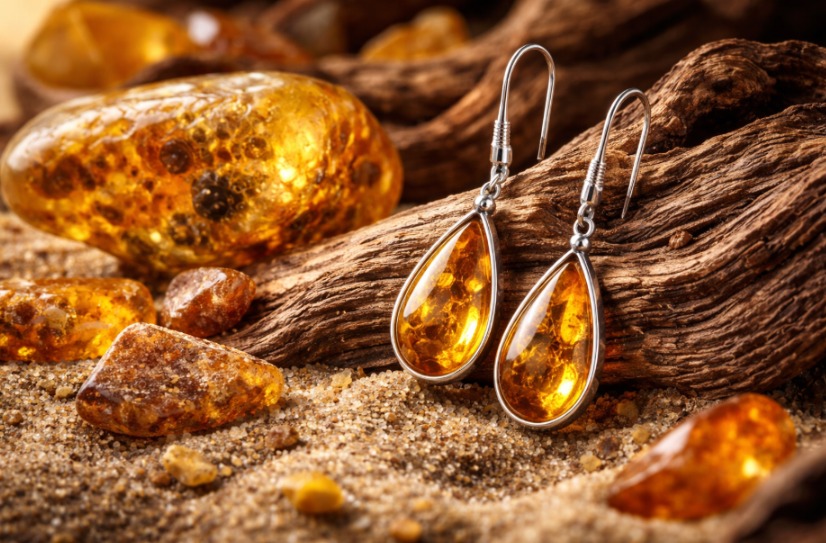
Baltic amber, however, is entirely different. Unlike conventional gemstones, it forms from ancient tree resin that has fossilized over millions of years. Understanding how baltic amber earrings are created offers valuable insight into their authenticity, uniqueness, and lasting appeal.
The article describes the process of making Baltic amber earrings using fossilized resin, step by step.
1. Formation of Fossilized Resin Over Time
The process began millions of years ago in the ancient forests. Resin was released by trees as a defensive mechanism against injuries, environmental stress, or insect activity. In comparison to sap, this resin was thicker, and this fact enabled it to entrap organic substances like leaves, bark, and even small insects. As a result, every jewelry made from amber such as Baltic amber earrings has unique and natural characteristics.
Gradually, this resin solidified and was covered by layers of sediment. With an increase in pressure and temperature, the resin experienced a progressive transformation. This is the process called polymerization, which transformed its chemical composition and turned it into amber.
The uniqueness of the Baltic amber is its age and stability. It is estimated to be approximately 40 to 60 million years old, thus making it durable and possessing a distinct look. It has colors that vary between light yellow, brown, and dark orange.
As this change happens naturally, there are no two identical pieces of amber. This natural difference further affects the distinctiveness of every jewelry piece.
2. Extraction From the Baltic Region
After being formed, amber must be carefully controlled. The majority of the Baltic amber is discovered around the Baltic Sea region and is gathered either along the shore or excavated underground.
The process of extraction needs to be controlled. Compared to most gemstones, amber is soft and thus can be easily damaged or cracked with poor handling. Competent collectors apply methods that do not alter the purity of the raw material.
Amber is commonly found along seashores, especially following storms when the waves carry amber to the beach. Mining, on the other hand, entails reaching deposits that are buried under layers of earth and sand.
This step is necessary as it defines the quality of the raw amber. Only those pieces that are well preserved are further processed. Furthermore, the sourcing in the Baltic region will guarantee that the amber satisfies the properties that are linked to actual fossil resin.
3. Sorting and Authenticity Verification
Raw amber is sorted after it is extracted according to various criteria. These include color, clarity, size, and inclusions like small air bubbles or fragments of plants.
At this point, authenticity is crucial. Specialists thoroughly inspect each piece to make sure that it is not a fake or a modified one. This step removes substances such as pressed amber or younger resins such as copal.
Moreover, grading defines the usage of every piece. Polished jewelry can be made from the clearer stones, while more textured stones can be incorporated into unique, artistic designs.
4. Cutting and Shaping the Amber
After verification, the amber is cut and molded. This process converts rough, uncut stones into polished jewelry.
During the initial crafting phase, artisans start to carve Baltic amber earrings by choosing the stones that are the similar size, color, and balance. It is necessary to ensure symmetry in the final design.
Since amber is a softer material than other minerals, such as quartz or diamond, cutting needs special equipment and a limited amount of pressure. Artisans either make every item by hand or with precision machinery, and there is little wastage.
Moreover, shaping improves the natural beauty of the amber. Craftsmen do not impose unification, but instead tend to follow a natural line of the stone, maintaining its naturalness.
5. Polishing for Clarity and Shine
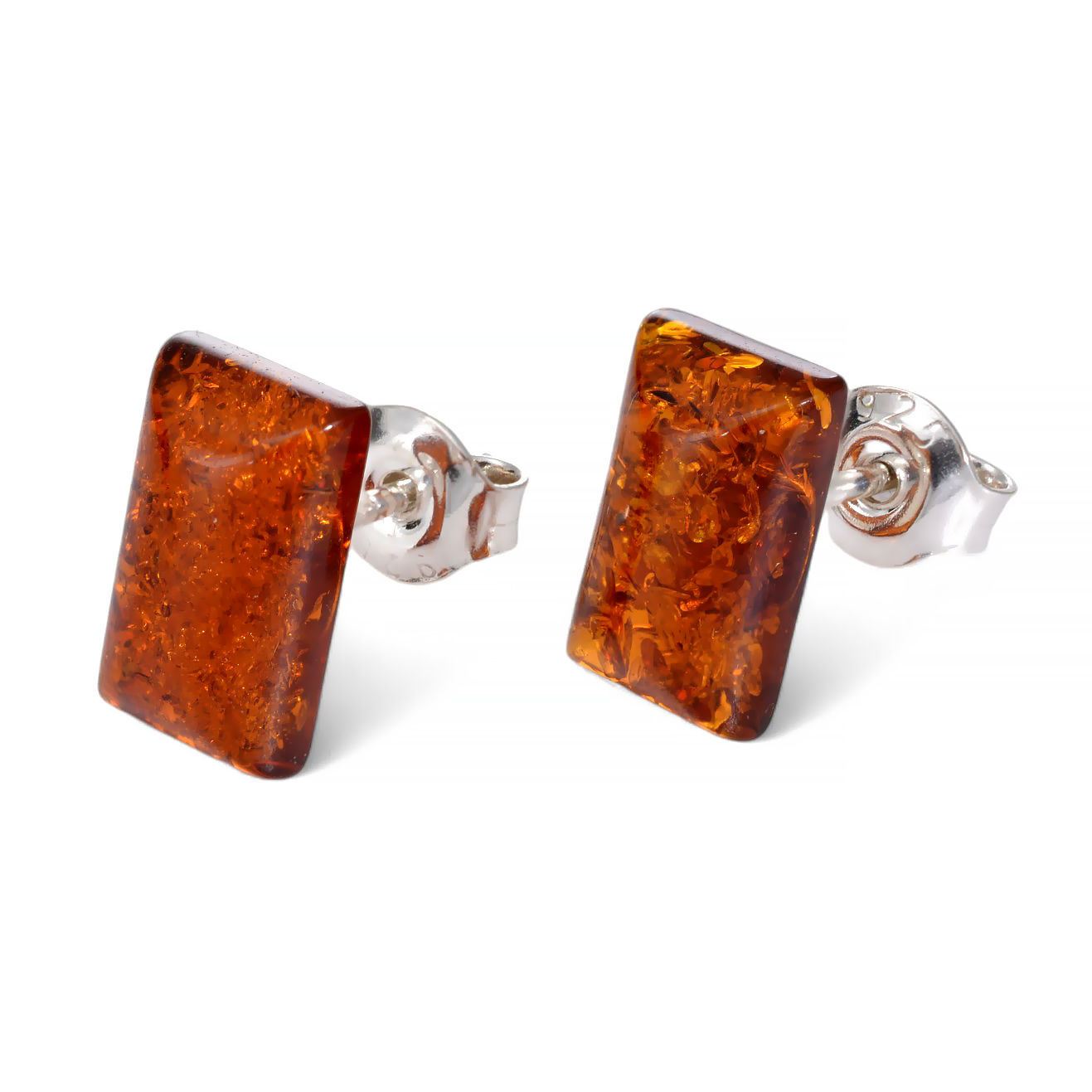
After shaping, the amber undergoes polishing. This step is crucial because raw amber often appears dull or rough.
Through gradual polishing techniques, the surface becomes smooth and glossy. As a result, the stone’s internal patterns, colors, and inclusions become more visible.
Polishing not only improves aesthetics but also enhances durability. A well-polished surface is less prone to scratches and better suited for long-term wear.
Additionally, this stage requires patience. Over-polishing can damage the stone, while insufficient polishing fails to bring out its full visual depth.
6. Setting and Final Assembly
Finally, the polished amber is set into metal frameworks to create earrings. Common materials include sterling silver and gold-plated settings, which complement amber’s warm tones.
This stage combines design and engineering. The setting must securely hold the amber while allowing light to pass through the stone. Proper positioning enhances both appearance and durability.
Moreover, artisans ensure that each pair is balanced and comfortable to wear. Attention to detail at this stage defines the overall quality of the finished piece.
Conclusion
The creation of Baltic amber earrings is a process that combines natural history with skilled craftsmanship. From the formation of resin millions of years ago to the final stages of polishing and setting, each step contributes to the uniqueness of the finished piece.
By understanding how amber is formed, sourced, and crafted, you gain a deeper appreciation for its authenticity. Instead of viewing it as just another accessory, you can recognize it as a material shaped by time and refined by human expertise.
This combination of natural origin and careful craftsmanship is what makes Baltic amber earrings truly distinctive.